
Your benefits blueprint: Steps to designing a smarter healthcare experience

Remember the days when your family doctor was the first person you called for anything health related? They knew your history, your preferences, and always pointed you in the right direction. That made healthcare feel personal and easy.
Today? It’s a maze. Between premiums, coverage, in-network lists, urgent care options, and a dozen point solutions, many members are totally lost—especially when they’re sick or stressed. In fact: 73% of employees want more education on their company benefits.
If your employees can’t find or understand the robust benefits you invest in, that investment simply falls flat.
As a benefits manager, you’re the architect of your benefits plan. Your vision lays the foundation for a happier, healthier workforce. But turning today’s complexity into a simple, member-centered plan requires asking a few tough questions:
- Do members know where to start when they need care?
- Are your benefits integrated?
- Can your program evolve without adding more confusion?
If the answer to any of these is “no,” it’s time to grab your hardhat! Here is the 6-step blueprint to build a smart, connected, and easy-to-navigate house of benefits.
Step 1: Start with a strong foundation
Every sturdy house begins with a strong foundation, and your benefits program is no different. Your foundation is intelligence—data, insights, and personalization. Without it, even the most comprehensive benefits may be underused.
The goal is to create a GPS for health. This means using claims data, health risk assessments, and member preferences to give tailored, proactive recommendations. Whether an employee is managing a chronic condition or just trying to stay well, the guidance should adapt to their evolving needs.
Ask yourself: Can your benefits program adapt to member needs without adding complexity? If the answer is “no,” it’s time to rethink your blueprint.
Step 2: Bring it all under one roof
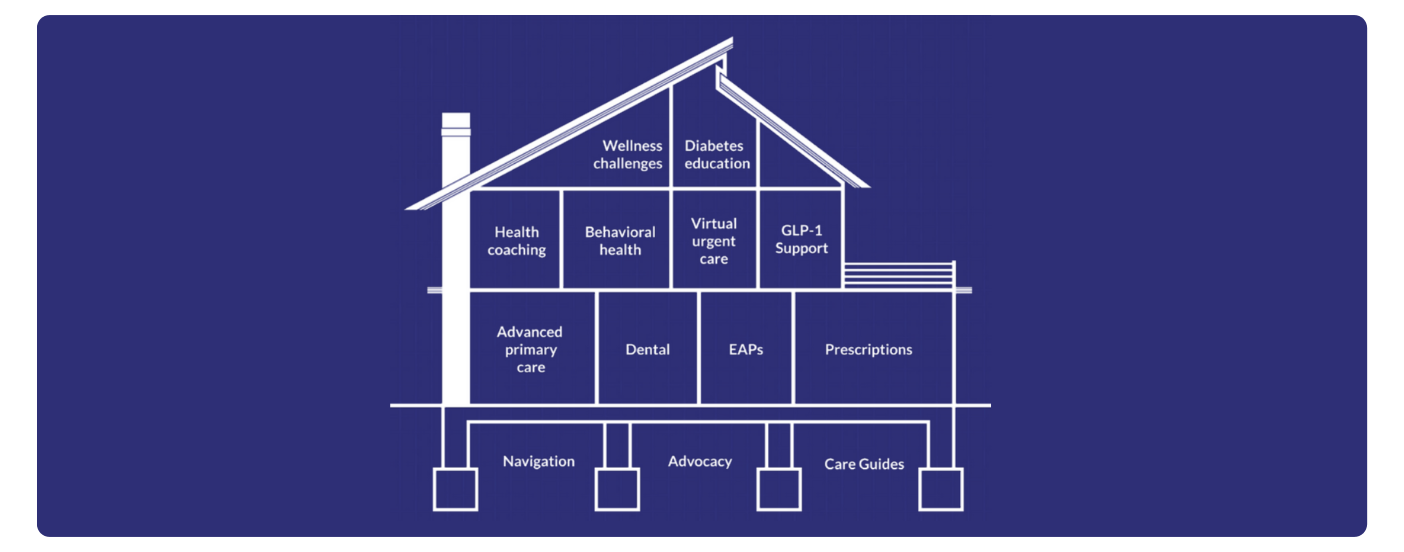
You likely offer amazing resources: telehealth, Employee Assistance Programs (EAPs), chronic condition management, mental health support, and more. But if those services live in separate silos, it’s like building a house where every room has its own separate outdoor entrance and no connecting hallways.
Bringing it all under one roof means creating a single destination where members can access every benefit, tool, and support service available to them. This makes it easier for members to engage, gives you a clearer view of what’s working, and maximizes your ROI. Consolidation reduces the administrative burden for everyone involved.
Step 3: Give members the key to unlock the front door
The most beautifully designed house is useless if no one knows how to get inside. Too often, members don’t engage simply because they don’t know where to start.
Your benefits program needs a clear, intuitive front door—a single place to log in and explore care options. This access point should be:
- Mobile-friendly
- Easy to navigate
- Personalized to each individual’s health status and goals
A welcoming and easy-to-access front door removes the guesswork, reduces frustration, and builds trust. Once members know where to enter, they are far more likely to use what’s inside.
Step 4: Build pathways that invite engagement
You’ve brought everything under one roof, but are the pathways inside clear? Members need to understand what’s available, when to use it, and how it connects to the rest of their care.
Ask yourself: Are the resources inside accessible, relevant, and clearly labeled? Is the path to support obvious, or are there hidden barriers?
The best programs offer an integrated, user-friendly experience where all services are visible and contextualized. This thoughtful design encourages smarter use and increases the likelihood that members will take advantage of the care options available.
Step 5: Install ongoing touchpoints
You can’t “set it and forget it” when it comes to engagement—it’s an ongoing process. It’s important to regularly stay in touch with members, offering relevant, timely support. This might include:
- Preventive care reminders.
- Incentives for completing screenings.
- Personalized communications based on their claims or activity.
- Outreach from care teams for high-risk individuals.
When members receive proactive guidance, they are more likely to engage, stay healthy, and avoid costly care. This transforms your program from a static menu into a dynamic support system.
Step 6: Wire in flexibility from the start
The healthcare landscape is changing fast. GLP-1 medications, virtual care, mental health crises, and increasing costs are all changing what employees need. To stay competitive, your benefits must evolve too.
Flexibility is a must-have, not a nice-to-have. You need partners and platforms that offer modular, scalable solutions, allowing you to layer in new offerings without starting from scratch. With the right infrastructure, you can build for today while being perfectly prepared for what tomorrow may bring.
Elevate what you’ve built with smarter design
If you’ve already built something valuable but are struggling to bring it all together, don’t worry—you don’t need to knock the house down! You simply need a better blueprint.
By following these six steps, you can shift from managing a maze of disconnected services to offering a cohesive, guided experience that truly empowers your members and reduces waste.
Castlight helps employers bring this strategy to life by acting as both the front door and the entire “house,” unifying everything under one digital roof.
Castlight sets itself apart by:
- Unifying Programs: Housing existing programs or building from scratch with a curated selection of offerings and bringing together all your point solutions and benefits programs.
- Personalized Guidance: Using a personalized, data-driven approach to guide members to the right care at the right time based on their condition, plan design, preferences, and needs.
- Ongoing Support: Keeping the lights on with proactive, personalized nudges and ongoing support from Care Guides.
The result is improved outcomes, a lower total cost of care, and a better experience for everyone.
Ready to start building?