
Beyond the brochure: Elevating your benefits communication strategy

As HR benefits leaders, you dedicate considerable time and effort to researching, selecting, and implementing benefit programs designed to support your workforce. These programs are often a significant investment, intended to improve employee wellbeing, satisfaction, and retention. But even the strongest benefits program won’t have its full impact unless employees know about it, see the value, and feel confident using it. The challenge isn’t a lack of effort—it’s making sure your message breaks through. After all, your beautifully crafted email is competing with everything from viral videos to the latest office potluck sign-up sheet.
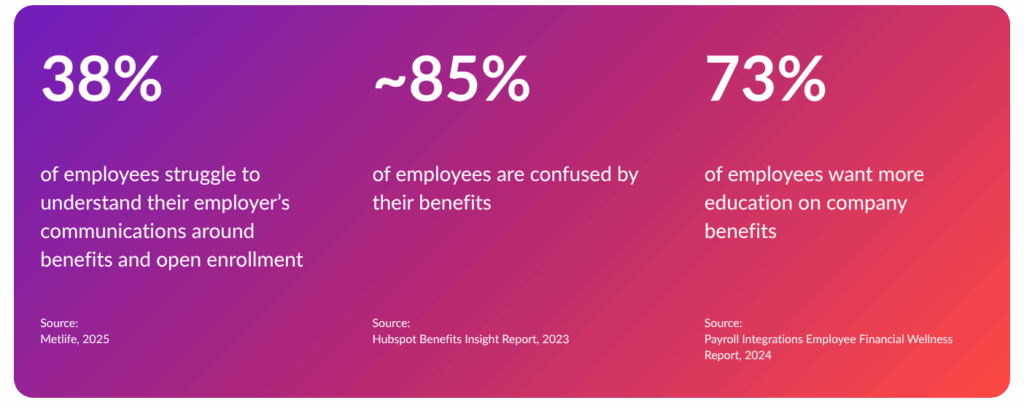
In this blog, we’re sharing key insights from our webinar on communicating benefits. During the conversation, Shelly Towns, Chief Marketing Officer for Lantern, and Meredith Turner-Williams, Senior Vice President of Client & Operations for Castlight, offered practical advice for HR leaders. Their insights can help turn communication into connection, so all the hard work you put into designing benefits translates into real employee engagement. And right now, the stakes couldn’t be higher. Gallup reports that declining employee engagement worldwide is tied to an eye-opening $438 billion in lost productivity. Benefits aren’t just something to check off a list anymore. They’re one of the strongest tools you have for boosting engagement, retaining talent, and building culture.
Understanding your audience: It’s not one size fits all
A recurring theme from the discussion was the critical importance of understanding your employee population. Just as marketers segment their audiences, benefits leaders should tailor their communication approaches.
- Diverse Needs, Diverse Channels: Recognize that different employee segments will consume information in different ways. While some employees may regularly check emails, others might be better reached through physical touchpoints in a breakroom, or even through short-form, scroll-friendly content.
- “What’s in it for me?”: Always frame your communications from the employee’s perspective. Instead of simply listing features, highlight the tangible benefits and how the program can positively impact their life. For instance, instead of “Access to a national network of providers,” consider “Find top-rated doctors for your needs, reducing your out-of-pocket costs.”
- The Power of Simplicity: Strive to communicate information at an accessible reading level, ideally around a 4th-grade level. Avoid jargon, acronyms, and overly complex language that can deter engagement. If you need a glossary to explain your glossary, it’s probably time to simplify.
Beyond traditional methods: Embracing creativity
While foundational communication methods like emails and direct mail remain relevant, the webinar emphasized the need to think creatively to cut through the noise.
- Tangible Reminders: Physical items, like ID cards or even branded magnets with useful information, can serve as persistent reminders of available benefits. The tangibility helps the message stick in a way a digital note might not.
- Leverage Existing Platforms: Meet your employees where they are. If your workforce actively engages with platforms like Slack, Microsoft Teams, or Intranet sites, explore how these channels can be used to deliver engaging, approachable content about benefits. Think short videos, quick polls, or even fun cameos from leaders.
- On-site Visibility: For organizations with physical workplaces, maximize visibility in high-traffic areas. Posters in breakrooms, floor decals, or even flyers in restroom stalls can be surprisingly effective due to repetitive exposure. Don’t be afraid of bright, eye-catching designs that stand out.
- Swag That Works: Thoughtful, useful branded merchandise can be a powerful communication tool. Instead of generic items, consider what employees would genuinely use and keep, like a massage gun or practical kitchen items, so your message becomes part of their daily routine.
Strategic implementation: Test, measure, and adapt
Effective benefits communication isn’t a one-time event; it’s an ongoing process of strategy, execution, and refinement.
- Think Like a Product: View your benefits program as a product with features and benefits that need to be actively marketed. Develop a comprehensive product marketing strategy for your benefits.
- Incentivize Action: Leverage behavioral economics by incorporating incentives to encourage desired actions and utilization. Discounts or rewards can be powerful motivators.
- Measure Everything: Don’t just send communications; measure their impact. Track engagement rates, call volumes, and, most importantly, utilization of the benefits. This data will inform what’s working and what isn’t.
- Iterate and Optimize: Be prepared to adjust your strategy based on your measurements. What worked last year might not work this year. Continuously test new approaches, do less of what’s ineffective, and amplify what drives results.
- Partner with Vendors: Expect your benefit vendors to be partners in communication. They should understand your employee population and work with you to tailor messaging and leverage effective channels. Co-branding materials with your organization’s logo adds credibility and reinforces the connection.
- Targeted Outreach: Navigation apps can make this personalization much easier by using claims data and employee demographics to identify who might need certain services most and guide them with timely, one-to-one messages. Instead of a mass campaign, navigation tools ensure the right person gets the right nudge at the right time—helping employees feel supported and confident in using their benefits.
Ultimately, successful benefits communication requires a multi-faceted approach that is empathetic to the employee experience, creative in its execution, and rigorous in its measurement. By embracing these best practices, HR benefits leaders can go beyond sharing information and instead spark real connection—helping employees not only understand their benefits, but actually use them to improve their health and wellbeing. When benefits communication clicks, employees don’t just read—they engage. And that’s when your hard work pays off.
Want to learn about benefits communication strategy? Watch the full webinar on demand.