
How to get the most out of a corporate wellness challenge

Steps challenges—activities that leverage healthy competition and encourage physical movement—are widely used by employers to boost camaraderie and get employees active. It’s no surprise that company-wide challenges are so commonly used in health benefits strategies. They’re an effective, reliable, and surprisingly easy tool to implement and use.
At Castlight, challenge setup is simple—all benefits teams have to do is select a challenge type and theme, start date, and choose whether or not to award points and prizes.
Organizations who leverage Castlight’s challenge feature see impressive results including:*
- 55% of participants are active daily
- 66% of participants meet daily 5k step goal
- 75% of participants active in the last 7 days
- 5% increase in Castlight registrations
The increase in steps is the gateway to an even greater advantage: getting employees to engage in their health and well-being and driving them to utilize programs and benefits made available to them by their employer. Ultimately, participating in a challenge helps employees live their healthiest lives in a multitude of ways.
Challenges produce results because they’re developed based on science-backed behavior change models and use gamification to create a fun, engaging experience.
Behavior change research dates back nearly a century to Kurt Lewin, the father of social psychology. Modern day behavioral scientist BJ Fogg nicely summarizes many of the field’s findings into a model highlighting the three things that are needed to change people’s actions: motivation, ability, and prompt.
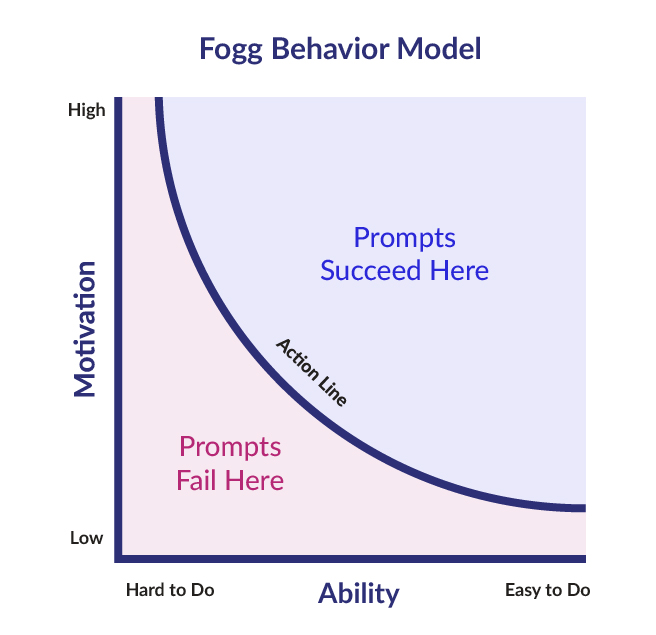
- Motivation means that people will move toward experiences that contribute positively to pleasure, hope, and social acceptance. And they will move away from experiences that cause pain, fear, or a sense of rejection.
- Ability refers to making actions simple and attainable, ensuring a person is capable of completing a target behavior.
- Prompt means giving people a cue to act now.
When all three of these factors are present, behavior change can occur.
With all of the available research on behavior change, we can conclude that challenges should be pleasurable and include a social connection component (motivation), easy to achieve (ability), and have a clear call to action (prompt). This can transform an employee’s experience by turning what seems like a daunting task—being more physically active—into a fun activity, better enabling individuals to create healthy habits.
How to get the most out of wellness challenges?
To design a challenge that truly engages employees, benefits teams should focus on a few key strategies to maximize participation and impact.
Timing: There’s no wrong time for a challenge. We recommend hosting a challenge twice a year, as this frequency allows companies to reap even more benefits—more registration, more activity, more program utilization—without creating challenge fatigue from hosting too many during the year. While there’s no wrong time, it’s wise to make sure these activities don’t overlap with big company-wide events, like open enrollment, so company communications can focus on the challenge. Consider aligning challenges around national observances like: Mental Health Month, Employee Health and Fitness Month, or Walktober.
Rewards and Incentives: These can be a great way to motivate employees to participate. If your well-being rewards are based on a points system, you could encourage challenge enrollment and daily engagement by offering five points for completing specific actions. Earning a sweepstakes entry (to win bigger prizes like a $100 gift card) for achievements such as signing up for the challenge, joining a team, and achieving challenge milestones promotes continued participation, even if the individual isn’t on a top team. Additional rewards for the top teams or individuals at the end of the challenge can make it seem more fun by peppering in a bit of healthy competition. Some Castlight customers have even committed to making a company donation to a charity if their employees can meet an organization-wide step goal.
Challenge Type: Much like how there’s no wrong time, there’s also no wrong type of challenge to choose as long as each one promotes social connection and motivation, whether through a team chat, tagging colleagues, or sharing gifts during a challenge. However, it is a good idea to offer different types of challenges to keep things fresh and exciting for members. Castlight’s philosophy is to alternate between various challenge offerings.
Promotion and Prompts: Employers who actively promote the challenge can see higher engagement from employees. For example, Castlight provides customers with a suite of marketing collateral, such as posters, employee emails, and communications templates for the employer’s intranet and other channels. In addition to reminders from the employer, Castlight stimulates challenge engagement by sending notifications that celebrate achievements and promote social connection.
Challenges encourage more physical activity, foster social interactions within and across teams, and boost benefits program utilization among those who participate. In addition, not only are they an effective launchpad for engaging employees, challenges are also quite simple for employers to turn on. The simplicity to turn on paired with member outcomes makes this an excellent tool for successfully engaging individuals in their health and well-being.
*Based on internal Castlight user data.