
How healthcare navigation has failed

Authored by Matthew Taylor, Vice President of Health Plan & Employer Sales
Healthcare is one of the most personal experiences a person can have. And yet, navigating it often feels like wandering through a maze—with no map, no guide, and no real help.
I’ve spent years watching the evolution of healthcare navigation tools, platforms, and point solutions. And despite all the money, the innovation, and the so-called personalization—we’re still failing the people who matter most: the employees, the members, the patients.
Today’s standard healthcare navigation systems are broken.
And unless we rethink what we expect from it, we’ll keep throwing more solutions into an already overcrowded, ineffective system.
The failure of fragmented healthcare navigation
Let’s start with the obvious—healthcare is far too fragmented, complicated, and expensive.
The problem isn’t just the high costs or confusing insurance plans, it’s that the entire experience has become increasingly disconnected. And in that fragmentation, people are getting lost.
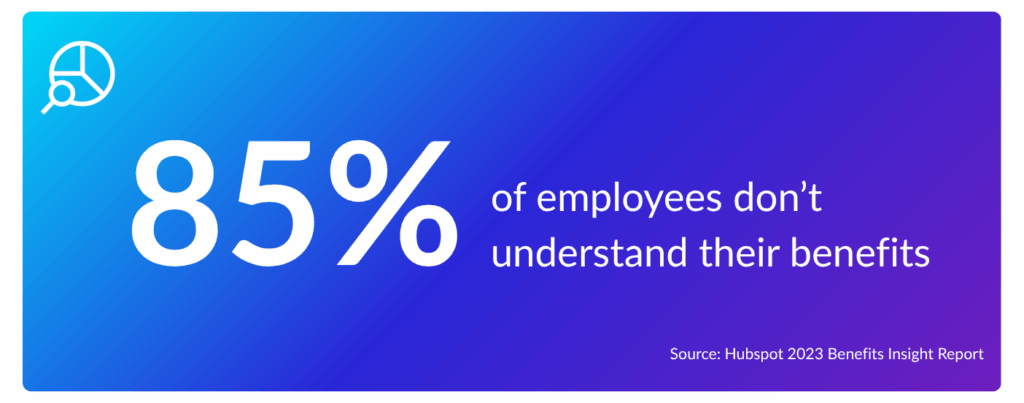
Digital healthcare is booming. More than 1,500 digital health startups with billions in funding have tried tackling this problem over the last decade. Meanwhile, 85% of employees continue to not understand their health benefits.
Additionally, based on data from the Bureau of Labor Statistics, the National Center for Health Statistics, and the United States Census Bureau’s Current Population Survey, administrative roles in healthcare have exploded by thousands of percentage points (3,200% between 1975 and 2010) while the number of practicing physicians has only increased about 150%, in line with population growth.
Traditionally, primary care was meant to serve as the hub—coordinating care and specialists, and helping people understand and make decisions. But primary care has been stretched thin. Resulting in fewer real relationships with providers, less face time with doctors, and more time spent navigating complex systems when that’s the absolute last thing you want to be doing—when you or your family are sick or hurting.
As a result, people don’t feel cared for. They feel frustrated and lost. When primary care can’t guide people, the burden doesn’t disappear—it shifts. Employees are pushed into a benefits landscape filled with point solutions and digital tools that operate in silos, forcing them to become their own care coordinators.
Why most “personalized” healthcare still isn’t personal
We love to throw around the word personalization in healthcare. But let’s be honest: much of what we call personalization today is nothing more than algorithmic noise.
You can’t call it personal if the system still makes users do all the work—scrolling through hundreds of providers, reading fine print, comparing costs, and guessing what’s right for them.
True personalization means:
- Smart curation: Show people the right options (not all the options).
- Integrated experiences: Healthcare should feel seamless, not like a disconnected patchwork of tools and apps.
- Guided decisions: Digital tools should anticipate needs, not just respond to them.
- Human touch: Digital support is incredible—and getting even better all the time—but it will never surpass the need or value of real, live, human support.
We went from three TV channels to thousands and thought that would make things better. But now we scroll endlessly, overwhelmed, and still say, “There’s nothing good on!”
That’s exactly what’s happening in healthcare.
The best platforms don’t just deliver content—they deliver curated clarity. Just like Netflix shares shows you might be interested in based on your profile instead of overwhelming you with every movie ever made, healthcare navigation should guide you to the right choice at the right time, based on your unique situation.
This is Castlight’s superpower: providing customized, proactive digital guidance paired with unparalleled human support with our Care Guides, a team of navigation experts and registered nurses, dedicated to guiding and advocating for our members.
Rethinking healthcare navigation for the modern workforce
Employers and benefits consultants have tried to improve employee’s available benefits and care experience by adding more—more options, more programs, more plans.
But more doesn’t mean better, necessary, or effective.
While every single new benefit option may have made sense on its own, when thrown into a sea of countless choices, it likely got lost. Without a central hub to guide people, each new offering just adds another decision to an already overwhelming list.
If you want employees to actually use their healthcare benefits, the answer isn’t just to offer more—it’s to help them navigate what’s already available to them. So it comes at no surprise then that, according to Business Group on Health’s 2026 Employer Health Care Strategy Survey, almost half of employers currently offer an engagement platform, and report this number will grow to more than 60% in the next three years.
We can’t keep throwing more options at employees. We need to start guiding them to the right answer—before they even ask the question.
For example, the Castlight app’s ‘Next for You’ proactive recommendations section on the homescreen shows customized prompts based on the member’s health assessment, goals, and claims data. Haven’t made it to your annual physical yet this year? Expect a prompt saying: Based on your health history, you’re due for an annual doctor appointment. Find a doctor nearby.
What the future of healthcare navigation must—and will—look like
Healthcare used to have curators; they were called doctors. But doctors are too overwhelmed to curate anymore. That’s why digital navigation must pick up where they left off.
The future of navigation isn’t about replacing primary care, it’s about strengthening it. When digital navigation tools are connected to a member’s primary care experience, we create a powerful foundation: a trusted clinician supported by real-time benefits awareness, data-driven recommendations, and seamless coordination. Primary care becomes what it was always meant to be—a central guide. And navigation fills in the gaps by surfacing options, simplifying decisions, and engaging members between visits.
The next era of healthcare navigation has to move beyond passive digital tools. It has to become active, intelligent, and human-centered.
Here’s what that means:
- Smarter care curation: A good doctor doesn’t suggest every test or treatment out there. They recommend the right one. Digital health platforms should do the same.
- Primary care integration: Navigation should support and amplify primary care relationships, ensuring members have a trusted clinical foundation alongside digital guidance.
- Modular, virtual-first care models: Digital assistants and virtual care solutions will increasingly fill the gaps in access, providing guided, personalized support on-demand.
- Proactive engagement: Tools like Castlight can notify users when it’s time to act, whether it’s letting them know that they’re due for a preventive visit, scheduling a follow-up appointment, or accessing mental health support.
The future of healthcare navigation also shouldn’t be about choosing between AI and human support—it’s about combining the best of both to create a smarter, more empowering experience.
With Castlight Health, members navigate healthcare on their terms—digital when they want it, human when they need it
At Castlight, we’re not trying to offer more point solutions. Instead, we’re building a unified platform that makes healthcare navigation truly personal, intuitive, and effective. Our platform doesn’t just surface benefits—it connects them, personalizes them, and guides members to action.
From AI-powered insights paired with human-powered care to seamless partner integrations and personalized nudges, we’re redefining what navigation means in a modern, fragmented healthcare system. It’s time to raise your expectations for healthcare navigation. Don’t settle for bloated systems and passive tools.
Your employees deserve better—and so do you.