
The benefits program your employees actually use might not be yours

What the 2026 Castlight Employee Benefits Report reveals about the widening gap between what employers offer and what employees actually use.
Here’s a scenario that might sound familiar: You’ve spent months building out a robust benefits portfolio with mental health apps, chronic condition programs, fertility benefits, and telehealth options. Open enrollment comes and goes. Then you check utilization numbers and feel that familiar sting. The benefits are there. But employees aren’t using them.
While you were perfecting your benefits stack, your employees were building their own. A meditation app here, a fitness tracker there, a nutrition program they found on social media. Consumer health tools offer what employer benefits often don’t: immediacy, simplicity, and the feeling that it was made for them. Sometimes paying out of pocket to do it.
It’s not a new problem. But it’s getting worse.
Castlight’s 2026 Employee Benefits Report: Inside the Minds of Today’s Users—based on a national survey of approximately 2,000 U.S. employees—reveals just how wide the gap has become. And more importantly, it tells us why.
The engagement problem isn’t about awareness, it’s about fit
Most employees have access to a broad range of health and wellbeing benefits. But access isn’t the same as engagement. Only 1 in 3 employees say they clearly understand what’s available to them, and only a fraction use those benefits regularly.
Employees aren’t tuning out, they’re opting out. When benefits feel rigid, confusing, or irrelevant to their current life stage, employees simply go find something better.
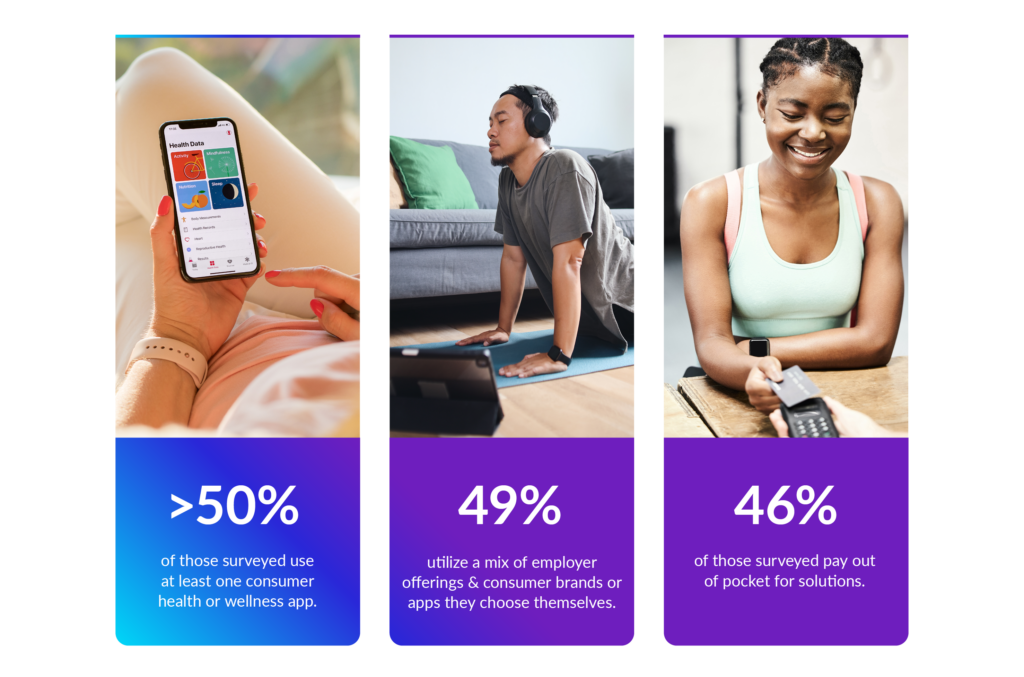
More than half of survey respondents use at least one consumer health or wellness app. 49% rely on a mix of employer offerings and consumer apps they choose themselves. And 46% are paying out of pocket for solutions that feel easier to use or more relevant to their lifestyle and needs.
The result is what we call the shadow benefits economy: employees quietly building their own “health stacks” made up of apps, devices, online resources, and personal recommendations — regardless of what their employer has already invested in.
The risk hiding in plain sight
Here’s the piece that should keep every benefits leader up at night.
86% of employees say they’re in good health. Nearly half report having no ongoing conditions at all. On the surface, that sounds great. But Castlight’s broader claims analysis tells a different story: 20% of employee populations carry significant hidden health risks and aren’t actively engaging with the healthcare system.
These “apparently healthy” employees aren’t low risk. They’re unknown risk. They skip preventive screenings, delay care until symptoms become crises, and often end up driving outsized costs when something finally does go wrong. The gap between a $2,000 preventive screening today and a six-figure diagnosis tomorrow is real. Closing that gap requires proactively reaching people before they feel like they need help.
What employers can do
The survey is clear on what employees want, it’s not more benefits. It’s better benefits. Here’s what the data points to:
1. Make benefits flexible. Over half of employees want their benefits to apply to products and services they already use. Flexible wellness stipends, curated marketplaces, and employee-directed options aren’t perks anymore, they’re retention tools. In fact, more than 80% of employees say they’d be more likely to stay with an employer offering a flexible wellness allowance.
2. Simplify the experience. Nearly 40% of employees would engage more if they had a single place to browse and manage all their benefits. The complexity of juggling multiple apps, logins, and vendors is a real barrier, especially for the employees who need support most.
3. Meet employees at their moment of need. Almost half of benefits usage is triggered by an unexpected health need or a stressful moment—not open enrollment. Benefits programs that only activate once a year will keep losing to consumer apps that are available the moment someone reaches for their phone.
4. Don’t ignore the apparently healthy. Proactive, personalized outreach to employees who seem fine is one of the highest-value investments an employer can make. Low utilization isn’t a sign of low need, it’s a sign of unknown need.
The bottom line
The era of “build it and they will come” benefits is over. Today’s employees are already navigating their health on their own terms. The employers who win will be the ones who make their benefits feel as intuitive, flexible, and personal as the consumer tools employees are already paying for themselves.
Ready to see the full picture? Download the 2026 Employee Benefits Report: Inside the Minds of Today’s Users to explore all the data—including generational breakdowns, out-of-pocket spending trends, and what it really takes to close the engagement gap.